2. Egypt Economic Outlook
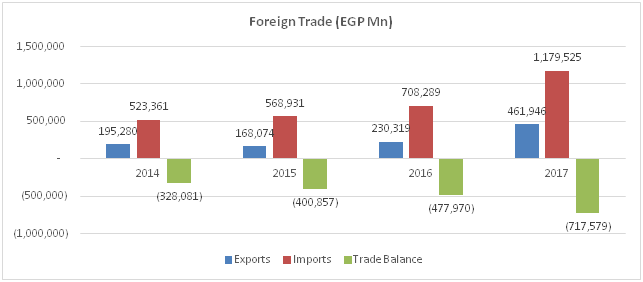
2.3 Trade Overview Despite the fact that Egypt’s exports grew by a higher rate than its imports during the period 2014-2017 (i.e. 33% vs. 31% for exports and imports respectively), the gap is wide in monetary terms, resulting in an increasing negative trade balance, as shown below:
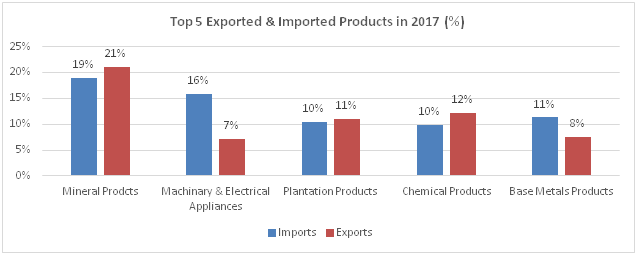
Distribution of imports and exports by product during 2017 revealed that the top five products, representing more than 60% of total imports and exports, are the mineral products, followed by machinery & electrical appliances, plantation products, chemical products and base metals products, as shown below:
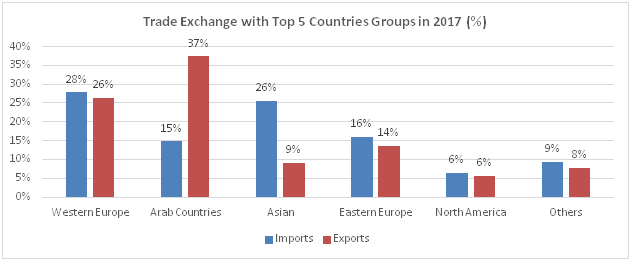
With respect to trade exchange by countries, European, Arab and Asian countries are Egypt’s key trade partners representing more than 80% of total imports and exports, as shown below:
« Back to DBI Egypt
Figure 5: Foreign Trade (EGP Mn)
Source: ECES, Egypt's Economic Profile & Statistics, 2018.
Source: ECES, Egypt's Economic Profile & Statistics, 2018.
Distribution of imports and exports by product during 2017 revealed that the top five products, representing more than 60% of total imports and exports, are the mineral products, followed by machinery & electrical appliances, plantation products, chemical products and base metals products, as shown below:
Figure 6: Top 5 Exported & Imported Products in 2017
Source: ECES, Egypt's Economic Profile & Statistics, 2018.
Source: ECES, Egypt's Economic Profile & Statistics, 2018.
With respect to trade exchange by countries, European, Arab and Asian countries are Egypt’s key trade partners representing more than 80% of total imports and exports, as shown below:
Figure 7: Trade Exchange with Top 5 Countries Groups in 2017
Source: ECES, Egypt's Economic Profile & Statistics, 2018.
Source: ECES, Egypt's Economic Profile & Statistics, 2018.
« Back to DBI Egypt